
The term “Artificial Intelligence” has transcended its status as a mere buzzword to become the defining technological paradigm of our era. For investors, it represents not just a sector but a foundational force reshaping every industry from healthcare and finance to agriculture and entertainment. As we look toward 2025, the initial wave of AI hype is crystallizing into tangible, revenue-generating platforms and ecosystems. The investment landscape is maturing, moving beyond simple stock picks to a more nuanced understanding of the AI value chain. This comprehensive guide is designed to navigate that complex chain, identifying the most promising AI platform investment opportunities for 2025. We will dissect the entire ecosystem, from the foundational picks and shovels to the transformative application layers, providing a strategic framework for building a robust and profitable portfolio poised to capitalize on the next phase of the AI revolution.
A. Deconstructing the AI Investment Ecosystem: A Layer-by-Layer Analysis
To invest wisely, one must first understand the structure of the market. The AI ecosystem is not monolithic; it is composed of distinct, interconnected layers, each with its own risk profile, growth potential, and key players. Investing across these layers can provide diversification and capture value from different aspects of the AI boom.
A. The Infrastructure Layer (The “Picks and Shovels”): This is the foundational layer, comprising the hardware and software required to build, train, and run AI models. Just as the gold rush created fortunes for those selling picks and shovels, the AI boom is creating immense value for companies providing the essential tools. This layer is often considered a lower-risk entry point because its success is tied to the overall growth of AI, regardless of which specific application ultimately wins consumer or enterprise favor.
B. The Model & Algorithm Layer (The “Brain Builders”): This layer involves the creation of the core AI models themselves. This includes companies developing large language models (LLMs), foundational models for computer vision, and sophisticated algorithms for predictive analytics. These are the engines of intelligence.
C. The Application & Software Layer (The “Problem Solvers”): This is the most visible layer to end-users, where AI models are packaged into software and services that solve specific problems. This includes everything from generative AI tools for creativity to AI-powered CRM and ERP systems.
D. The Specialized AI Services Layer (The “Integrators”): This layer consists of companies that help other businesses, particularly non-tech enterprises, implement and customize AI solutions. They provide the crucial consulting, integration, and management services that bridge the gap between complex AI technology and practical business outcomes.
B. Top AI Platform Investment Opportunities for 2025
Having established the framework, let’s delve into the specific, high-potential platforms and sub-sectors within each layer that are poised for significant growth in 2025.
1. Cloud AI Hyperscalers: The Powerhouse Utilities of AI
The computational demands of training and inferencing advanced AI models are astronomical. Very few companies can afford to build and maintain the required data center infrastructure. This has cemented the dominance of the major cloud providers, who have become the indispensable utilities of the AI age.
-
The Investment Thesis: Cloud platforms offer a diversified and recurring revenue stream. When a startup or enterprise builds an AI application, it pays for computing power (GPUs), data storage, and managed AI services from a cloud provider. This creates a ” toll-booth” business model; regardless of which AI application becomes popular, the cloud giants get paid.
-
Key Platforms & Players:
-
Microsoft Azure: With its deep, multi-billion-dollar partnership with OpenAI, Azure has positioned itself as the premier destination for enterprise-grade generative AI. The integration of Copilot across its entire software stack (Windows, Office 365, GitHub) creates a powerful ecosystem lock-in.
-
Amazon Web Services (AWS): As the long-standing market leader in cloud computing, AWS boasts a vast array of proprietary AI chips (Inferentia, Trainium) and a comprehensive suite of AI services (SageMaker, Bedrock). Its massive existing customer base provides a huge advantage in upselling AI capabilities.
-
Google Cloud Platform (GCP): Google is a pioneer in AI research, thanks to its work on TensorFlow and the Transformer architecture. Its Gemini model family and Vertex AI platform are competitive offerings. Google’s strength in search and digital advertising provides a massive internal use case and data advantage.
-
-
Investment Avenues: Direct stock investment in Microsoft (MSFT), Amazon (AMZN), and Alphabet (GOOGL). Alternatively, ETFs that have significant exposure to these tech giants.
2. Generative AI Development Platforms: The Factories for Digital Content
Generative AI has captured the public’s imagination, but its true economic impact will be felt in its platformization. Instead of just using a single AI tool, the opportunity lies in investing in the platforms that enable the creation of countless AI-powered applications.
-
The Investment Thesis: These platforms provide the APIs and developer tools that allow businesses to integrate advanced capabilities like text generation, image creation, and code automation into their own products. Their growth is tied to the proliferation of AI features across the digital economy.
-
Key Platforms & Players:
-
OpenAI: While still private, OpenAI is the undisputed leader in the LLM space. Its GPT-4 and subsequent models power its flagship product, ChatGPT, and are licensed to thousands of developers and enterprises through its API. Monitoring its path to a potential IPO is critical.
-
Anthropic: A key competitor to OpenAI, Anthropic has gained significant traction and investment from the likes of Amazon and Google. Its focus on developing safe, reliable, and constitutional AI (Claude models) resonates strongly with enterprise customers who have stringent compliance and safety requirements.
-
Midjourney & Stability AI: These companies are driving the revolution in AI-generated imagery and art. While their consumer-facing tools are popular, their long-term value lies in licensing their technology for use in marketing, design, entertainment, and e-commerce.
-
-
Investment Avenues: For public market investors, this space is challenging as many leaders are private. However, investing in the cloud providers that back them (e.g., Microsoft’s stake in OpenAI) is an indirect approach. Additionally, venture capital funds focused on AI provide exposure to pre-IPO rounds.
3. Specialized AI Chips and Hardware: The Engine Room
The voracious appetite of AI models for processing power has created a gold rush for advanced semiconductors. While NVIDIA has established a near-monopoly with its GPU-centric data centers, the landscape is evolving rapidly as new entrants and incumbents seek to challenge its dominance.
-
The Investment Thesis: The hardware required for AI is specialized and expensive. As AI adoption scales, the demand for more efficient, powerful, and cost-effective chips will explode. This includes not just training chips but also inference chips designed for running AI models at scale.
-
Key Platforms & Players:
-
NVIDIA (NVDA): The current king of AI hardware. Its CUDA software ecosystem and H100/A100 GPUs are the industry standard for training complex models. Its investment thesis revolves around maintaining this dominance as model sizes and data volumes continue to grow.
-
Advanced Micro Devices (AMD): AMD is the primary challenger with its MI300X series accelerators. It is aggressively competing on performance and price, and gaining significant design wins from major cloud providers looking to diversify their supply and reduce costs.
-
Custom Silicon (ASICs): The largest tech companies are designing their own chips. Google’s Tensor Processing Units (TPUs), Amazon’s Inferentia, and Microsoft’s Maia chips are examples. This trend puts pressure on pure-play chipmakers but highlights the critical importance of the sector. Companies like ARM Holdings, which designs the underlying architecture for many of these chips, also become compelling investments.
-
-
Investment Avenues: Direct investment in semiconductor companies like NVIDIA, AMD, and ARM. Also, consider ETFs tracking the semiconductor sector (e.g., SMH, SOXX).
4. AI-Powered SaaS Platforms: Embedding Intelligence into Workflows
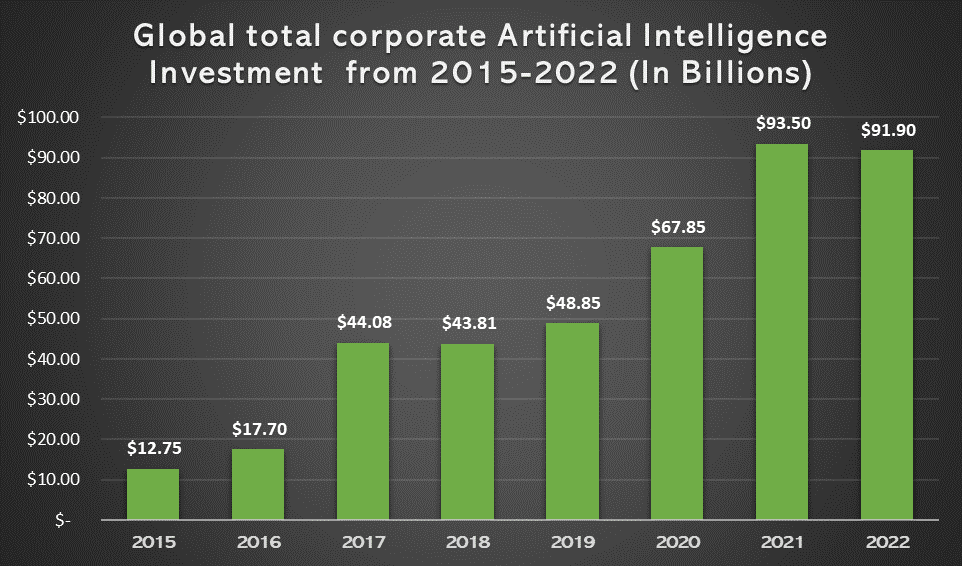
The most immediate and measurable ROI from AI often comes from Software-as-a-Service (SaaS) platforms that are seamlessly embedding AI to enhance productivity and decision-making.
-
The Investment Thesis: Established SaaS companies have vast datasets, deep customer relationships, and clear workflows into which they can integrate AI. This “AI-powered upgrade” cycle represents a massive upsell opportunity and a strong defense against disruption.
-
Key Platforms & Players:
-
Salesforce (CRM): With its Einstein GPT platform, Salesforce is infusing AI across its sales, service, marketing, and analytics clouds. This allows it to offer predictive lead scoring, automated content generation, and enhanced customer service insights.
-
Microsoft (MSFT): Beyond Azure, Microsoft’s integration of Copilot into its 365 suite is a landmark event. It effectively charges a significant premium per user to add AI assistance to Word, Excel, Outlook, and Teams, potentially unlocking billions in new recurring revenue.
-
Adobe (ADBE): Adobe’s Firefly generative AI models are deeply integrated into its Creative Cloud and Experience Cloud suites. This allows for revolutionary features like text-to-image generation and text-based video editing, solidifying its leadership in creative and marketing software.
-
ServiceNow (NOW): ServiceNow uses AI to automate and optimize IT service management, customer service, and HR workflows. Its Now Platform with predictive AI helps large enterprises prevent problems before they occur.
-
-
Investment Avenues: Direct investment in the stocks of these leading SaaS companies.
5. Robotics Process Automation (RPA) and Intelligent Automation
RPA was the first wave of corporate automation, using “software robots” to mimic repetitive, rule-based tasks. The next evolution is Intelligent Automation, which supercharges RPA with AI and machine learning to handle unstructured data and make cognitive decisions.
-
The Investment Thesis: As AI models become better at understanding documents, emails, and conversations, they can automate complex business processes end-to-end. This moves automation from the back office to the core of knowledge work, offering massive efficiency gains.
-
Key Platforms & Players:
-
UiPath (PATH): A leader in the RPA space, UiPath is rapidly integrating AI and computer vision capabilities into its platform. Its “Communicator” product, for instance, uses generative AI to automate and enhance customer communication.
-
Automation Anywhere: Another major RPA player, it offers a cloud-native platform that leverages AI to discover automation opportunities and handle semi-structured data.
-
-
Investment Avenues: Direct stock investment in publicly traded companies like UiPath.
6. AI in Healthcare and Drug Discovery
The application of AI in healthcare is perhaps one of its most profound use cases. The potential to accelerate drug discovery, personalize medicine, and improve diagnostic accuracy represents both a human and financial windfall.
-
The Investment Thesis: The traditional drug development process is incredibly slow and expensive. AI platforms can analyze vast biological datasets to identify new drug targets, predict the efficacy and toxicity of compounds, and even design novel molecules, potentially cutting years and billions of dollars from the R&D timeline.
-
Key Platforms & Players:
-
Exscientia: A pioneer in using AI to design new drugs, with several candidates already in clinical trials.
-
Recursion Pharmaceuticals (RXRX): Uses automated cell biology and AI to map the relationships between biology and chemistry, generating a massive dataset for drug discovery.
-
NVIDIA Clara: While NVIDIA is a hardware company, its Clara healthcare platform is a specific suite of AI tools and frameworks for medical imaging, genomics, and drug discovery, making it a platform play within the healthcare sector.
-
-
Investment Avenues: Investment in biotech firms with a strong AI focus (high risk/high reward). Alternatively, investment in the technology enablers like NVIDIA.
C. Strategic Investment Vehicles for AI Exposure
You’ve identified the sectors, but how do you actually invest? Here are the primary vehicles, each with its own risk-reward profile.
A. Direct Stock Ownership: This involves buying shares of individual public companies like Microsoft, NVIDIA, or UiPath. It offers the highest potential returns but requires significant research and carries company-specific risk.
B. Exchange-Traded Funds (ETFs): AI-focused ETFs provide instant diversification across dozens of companies in the AI ecosystem. This mitigates the risk of any single company failing.
* Examples: Global X Robotics & Artificial Intelligence ETF (BOTZ), iShares Robotics and Artificial Intelligence Multisector ETF (IRBO), ARK Autonomous Technology & Robotics ETF (ARKQ).
C. Mutual Funds: Several technology-focused mutual funds have substantial allocations to AI-leading companies. These are actively managed, so it’s important to review the fund’s strategy and holdings.
D. Venture Capital (VC) and Crowdfunding: For accredited investors, VC funds and certain crowdfunding platforms offer access to pre-IPO AI startups. This is the highest-risk segment but offers the potential for exponential returns if you back a future leader.
D. Critical Risks and Ethical Considerations for the Discerning Investor
No investment thesis is complete without a thorough risk assessment. The AI sector, while promising, is fraught with unique challenges.
A. Regulatory Uncertainty: Governments in the US, EU, and China are rapidly drafting AI regulations focused on privacy, bias, transparency, and national security. New laws could limit certain applications or increase compliance costs significantly.
B. Technical Hype vs. Reality: The “AI Winter” is a historical precedent where excitement outpaced technical capability, leading to a funding collapse. While the current wave is more robust, investors must distinguish between genuine technological breakthroughs and marketing fluff.
C. Intense Competition and Market Saturation: The barriers to entry for AI applications are lowering, leading to a flood of startups. A fierce “price war” in cloud services and AI APIs could compress profit margins.
D. Ethical and Reputational Risks: Companies face significant risks from biased algorithms, data privacy violations, misuse of generative AI for misinformation, and job displacement controversies. These can lead to legal liability, reputational damage, and stock price volatility.
E. Valuation Concerns: Many AI-focused companies, especially those in the public markets, trade at very high earnings multiples based on future growth expectations. Any failure to meet these lofty expectations could result in a sharp correction.
Conclusion: Building a Future-Proof AI Portfolio for 2025
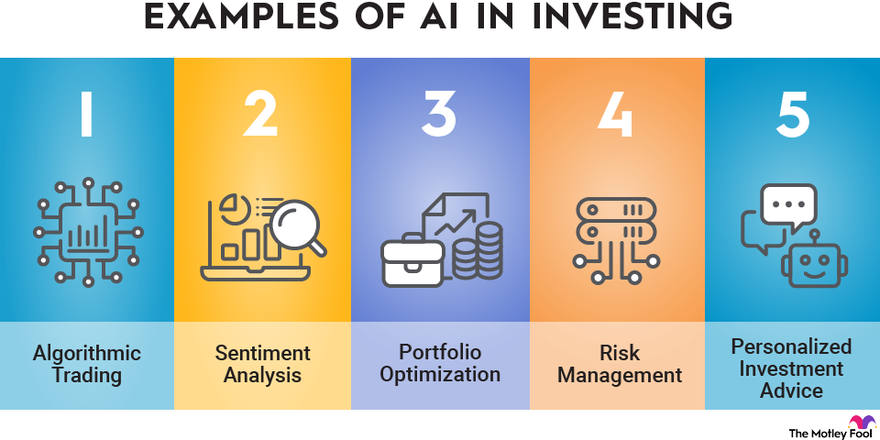
The AI revolution is not a fleeting trend; it is a fundamental technological shift on par with the advent of the internet or the personal computer. For investors, the period leading into 2025 represents a critical juncture to move from speculative betting to strategic positioning. The most successful approach will be a multi-faceted one, building a portfolio that captures value across the entire AI stack. This means anchoring your investments in the foundational “picks and shovels” of cloud and semiconductors, while also taking calculated positions in the transformative application layers of SaaS, healthcare, and automation. Diligence, diversification, and a long-term perspective are paramount. By understanding the ecosystem, recognizing both the opportunities and the risks, and selecting the appropriate investment vehicles, you can strategically position your portfolio to not only participate in but to profit from the ongoing and unstoppable rise of artificial intelligence.