For decades, the digital landscape has been dominated by a centralized paradigm. A handful of powerful corporations often referred to as “Big Tech” have become the gatekeepers of our data, our identities, our financial transactions, and our social interactions. While this model has delivered convenience and connectivity, it has come at a significant cost: a pervasive erosion of privacy, rampant data monetization without user consent, and systemic vulnerabilities to censorship and single points of failure.
We are now standing at the precipice of a fundamental transformation. The advent of blockchain technology and its underlying philosophy of decentralization is catalyzing a new era for the internet, often termed Web3. This is not merely an incremental upgrade but a complete architectural and philosophical overhaul of our digital infrastructure. Decentralized platforms are shifting power dynamics, returning control to individuals, and fostering a new wave of innovation that promises to be more open, transparent, and equitable.
This in-depth exploration delves into the seven most critical and transformative trends shaping the future of decentralized platforms. We will move beyond the hype of cryptocurrencies to uncover the profound structural changes occurring in how we organize, transact, create, and interact online. This is a comprehensive guide to understanding the forces that will redefine the next chapter of the internet.
A. The Architectural Revolution: From Client-Server to Distributed Networks
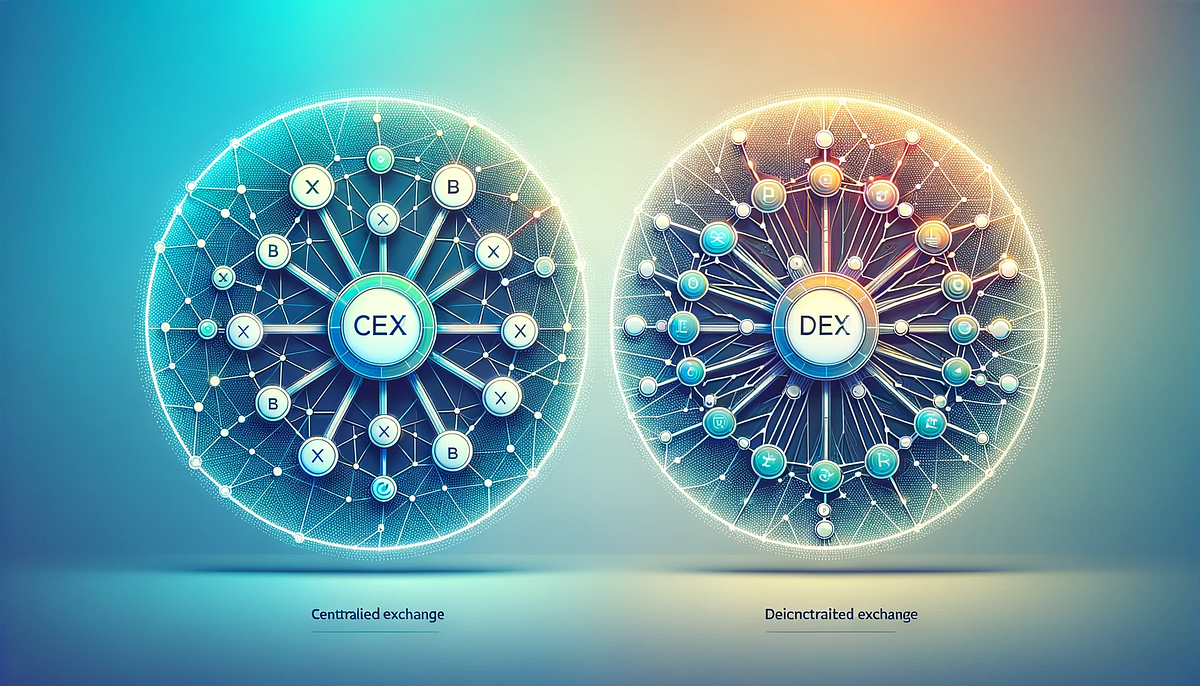
To appreciate the future, one must first understand the foundational shift in architecture. The traditional internet, or Web2, operates on a client-server model. In this setup, data is stored on centralized servers owned by a company (like Facebook, Google, or Amazon). Users (the clients) send requests to these servers to access information or services. This creates a hub-and-spoke model where the central entity has absolute control.
Decentralized platforms, the core of Web3, operate on a peer-to-peer (P2P) or distributed network model. Instead of a central server, data and control are spread across a vast network of independent computers, known as nodes. Each node maintains a copy of the entire network’s data, such as a blockchain. This architecture introduces several paradigm-shifting properties:
-
Censorship Resistance: It becomes nearly impossible for any single entity to alter, remove, or prevent transactions or data, as no single point of control exists.
-
Enhanced Security: Attacking a decentralized network is exponentially more difficult than attacking a centralized server. A hacker would need to compromise a majority of the nodes simultaneously, a feat that is economically and logistically prohibitive for well-established networks.
-
Trust Minimization: Through cryptographic proofs and consensus mechanisms, participants can trust the system’s output without needing to trust each other or a central intermediary. The code, which is often open-source and auditable, becomes the law.
-
Uptime and Resilience: With no central server to fail, decentralized networks can achieve near-perfect uptime. The failure of multiple nodes does not bring down the entire system.
This architectural revolution is the bedrock upon which all subsequent trends are built. It enables new forms of organization, finance, and digital ownership that were previously unimaginable.
B. The DAO Model: Redefining Organizational Structures
One of the most radical applications of decentralization is the concept of the Decentralized Autonomous Organization (DAO). A DAO is an entity with no central leadership, governed by smart contracts and the collective voting of its members, who hold governance tokens.
How a DAO Operates:
A. Smart Contract Foundation: The rules of the organization membership, treasury management, voting procedures are encoded into immutable smart contracts on a blockchain.
B. Token-Based Governance: Decision-making power is distributed to holders of the DAO’s native token. The more tokens a member holds, the greater their voting weight, though many models are experimenting with one-person-one-vote systems.
C. Treasury Management: DAOs collectively manage a treasury of funds (often in cryptocurrency) that can only be spent upon approval via member vote.
D. Proposal and Voting Process: Any member can submit a proposal for how the DAO should operate or spend its funds. Members then vote on these proposals, and if a predefined threshold is met, the smart contract executes the decision automatically.
Future Trajectory of DAOs:
The potential applications for DAOs are vast and extend far beyond their current use in managing DeFi protocols or investing in NFTs. We are likely to see:
-
DAOs for Venture Capital: Democratizing access to early-stage startup investments.
-
Grant and Philanthropy DAOs: Creating more transparent and community-driven charitable organizations.
-
Social DAOs: Forming exclusive online communities and social clubs with shared resources and goals.
-
Legal Entity Recognition: As seen with Wyoming and other forward-thinking jurisdictions, DAOs are beginning to gain legal status, bridging the gap between the digital and physical worlds of law.
-
Franchise and Business Operations: A global franchise could be managed as a DAO, with local franchisees holding governance tokens and voting on brand-wide decisions.
The DAO model represents a fundamental challenge to the top-down, hierarchical corporate structures of the 20th century, paving the way for more fluid, global, and meritocratic forms of human collaboration.
C. The DeFi Evolution: Building a New Global Financial System

Decentralized Finance (DeFi) is arguably the most mature and impactful application of blockchain technology to date. It is an ecosystem of financial applications lending, borrowing, trading, insurance, derivatives built on decentralized networks, primarily Ethereum, that operate without traditional intermediaries like banks or brokerages.
Core Pillars of DeFi:
A. Decentralized Exchanges (DEXs): Platforms like Uniswap and Sushiswap allow users to trade cryptocurrencies directly from their wallets using automated liquidity pools instead of a central order book.
B. Lending and Borrowing Protocols: Platforms like Aave and Compound enable users to lend their digital assets to earn interest or use them as collateral to borrow other assets, all governed by algorithmic interest rates.
C. Stablecoins: Cryptocurrencies pegged to stable assets like the US Dollar (e.g., USDC, DAI) provide a vital medium of exchange and store of value within the volatile crypto ecosystem.
D. Yield Farming and Liquidity Mining: Innovative mechanisms that incentivize users to provide liquidity to DeFi protocols by rewarding them with protocol tokens.
The Future Trajectory of DeFi:
The current DeFi ecosystem, while revolutionary, is still nascent and faces challenges like scalability, user experience, and regulatory uncertainty. Its future evolution will be characterized by:
-
Institutional Onboarding: The development of compliant, secure, and institutional-grade DeFi products will attract trillions of dollars from traditional finance.
-
Cross-Chain Interoperability: The future of DeFi is multi-chain. Protocols will seamlessly operate across different blockchains, allowing assets and data to flow freely between them, unlocking immense liquidity and functionality.
-
Integration with Real-World Assets (RWAs): The next frontier is the tokenization of real-world assets like real estate, invoices, and commodities on blockchain, making them accessible to DeFi lending and borrowing markets.
-
Enhanced Security and Insurance: As the value locked in DeFi grows, so does the incentive for hackers. We will see the rise of sophisticated, decentralized insurance protocols to protect users from smart contract vulnerabilities and exploits.
DeFi is not just about creating new financial products; it is about rebuilding the global financial infrastructure to be more open, programmable, and accessible to anyone with an internet connection.
D. The Creator Economy Reimagined: True Digital Ownership
The traditional creator economy, dominated by platforms like YouTube, Spotify, and Instagram, is built on an extractive model. Creators are often compensated with a small fraction of the revenue their content generates, and they relinquish significant control over their work, audience, and monetization.
Web3 and decentralized platforms are fundamentally rearchitecting this relationship through the power of Non-Fungible Tokens (NFTs) and new monetization models.
The Web3 Creator Paradigm:
A. NFTs as Provable Scarcity and Ownership: An NFT is a unique, verifiable digital certificate of ownership recorded on a blockchain. For creators, this means they can mint and sell their work (art, music, writing, etc.) directly to their audience, with the blockchain serving as an unforgeable provenance record.
B. Programmable Royalties: A revolutionary feature of NFTs is the ability to encode royalty structures directly into the smart contract. This means that every time an NFT is resold on a secondary market, the original creator automatically receives a percentage of the sale price a feature that is impossible to enforce in the traditional art and collectibles world.
C. Community as Patronage: NFTs evolve the concept of patronage. By owning a creator’s NFT, fans are not just customers; they are patrons and stakeholders in the creator’s success. This fosters a deeper, more symbiotic relationship.
D. Decentralized Social Media: Emerging platforms like Farcaster and Lens Protocol are building social media on blockchain, where users own their social graph and content. You could, in theory, take your followers and post history with you if you decide to switch platforms.
Future Implications:
This trend will lead to the rise of “creator DAOs,” where communities collectively fund and support artists. We will see novel forms of interactive and evolving art, and a significant shift in value away from platform intermediaries and directly to the creators themselves.
E. The Interoperability Imperative: The Rise of the Cross-Chain Ecosystem
The early days of blockchain were marked by a “chain maximalist” mentality, where communities believed their chosen blockchain would become the one to rule them all. The future, however, is decidedly multi-chain. Different blockchains are optimized for different trade-offs between security, scalability, and decentralization (the “blockchain trilemma”). Therefore, the ability for these disparate networks to communicate and share value interoperability is critical.
Key Technologies Enabling Interoperability:
A. Cross-Chain Bridges: These are specialized protocols that allow the transfer of assets and data from one blockchain to another. While they have been a security weak point, next-generation bridges are becoming more robust and trust-minimized.
B. Layer-0 Protocols: Projects like Polkadot and Cosmos are not standalone blockchains but rather frameworks designed specifically to build and connect multiple, application-specific blockchains (parachains or zones).
C. Inter-Blockchain Communication (IBC): Protocols like IBC, used in the Cosmos ecosystem, provide a standardized and secure way for independent blockchains to transfer data and tokens directly with one another.
The “Internet of Blockchains” Vision:
The end goal is an “Internet of Blockchains,” where a user on one chain can seamlessly utilize services and assets from another chain without even realizing the complex underlying transactions. This will unlock unprecedented composability, allowing developers to mix and match the best features of various networks to build powerful, user-friendly applications.
F. Decentralized Identity and Data Sovereignty: Taking Back Control
In the current digital age, our identities are fragmented and owned by countless third parties. Your digital identity is essentially a collection of profiles on Google, Facebook, and other platforms. You are the product, and your data is the raw material.
Decentralized Identity (DID) aims to flip this model, giving individuals sovereign control over their personal information.
Core Components of a DID System:
A. Decentralized Identifiers (DIDs): These are globally unique identifiers, stored on a blockchain, that an individual owns and controls. They are not issued by a central authority.
B. Verifiable Credentials (VCs): These are tamper-proof digital versions of physical credentials (like a driver’s license or university degree) that are issued by trusted entities and stored by the user in their digital wallet.
C. Zero-Knowledge Proofs (ZKPs): This is a groundbreaking cryptographic technique that allows one party (the prover) to prove to another party (the verifier) that a statement is true, without revealing any information beyond the validity of the statement itself. For example, you could prove you are over 21 without revealing your exact birthdate.
Practical Applications:
-
Streamlined KYC/AML: Instead of submitting your passport to every new financial service, you could provide a ZKP that verifies you are a legitimate, compliant user.
-
Selective Data Sharing: You could grant a social media platform access only to your name and email, without handing over your entire friend list and browsing history.
-
Sybil-Resistance and Reputation: DIDs can help build portable, on-chain reputations that are not tied to a single platform, preventing fake accounts and fraud.
This trend is foundational to a more ethical and user-centric digital world, ensuring that privacy is a default, not an afterthought.
G. The Convergence of AI and Decentralization
Artificial Intelligence (AI) and decentralization may seem like opposing forces one often centralized in the hands of a few tech giants with vast data and computational resources, the other seeking to distribute power. However, their convergence is one of the most exciting and impactful future trends.
How Decentralization Can Empower AI:
A. Decentralized Data Marketplaces: AI models are hungry for data. Decentralized platforms can enable individuals to monetize their own data directly to AI developers, creating a more equitable data economy than the current covert data harvesting model.
-
Federated Learning: This is a machine learning technique where a model is trained across multiple decentralized devices holding local data samples, without exchanging them. This preserves privacy while still benefiting from collective intelligence.
B. Verifiable and Transparent AI: The “black box” problem of AI, where its decision-making process is opaque, is a major concern. By running AI models on a blockchain, one can create an immutable audit trail of the model’s training data and decision logic, making AI more accountable.
C. Democratizing Access to Compute Power: Decentralized physical infrastructure networks (DePIN) can pool together unused computing power from around the world, creating a global, open marketplace for GPU and CPU resources, making it cheaper and more accessible for anyone to train sophisticated AI models.
This synergy has the potential to prevent AI from becoming a tool of centralized control and instead foster an open, collaborative, and transparent ecosystem for artificial intelligence development.
Conclusion: Navigating the Transition to a Decentralized World
The trends outlined here from DAOs and DeFi to decentralized identity and the convergence with AI are not isolated phenomena. They are interconnected threads being woven together to form the fabric of Web3. This transition will not happen overnight, and it will not be without its challenges. Regulatory frameworks need to be developed, user experiences need to be simplified, and the technology itself needs to mature to handle global scale.
However, the direction is clear. The centralized model of the internet has revealed its fundamental flaws. The decentralized future offers a compelling alternative: a world where individuals have sovereignty over their assets, their data, and their digital lives; where trust is placed in transparent code rather than opaque institutions; and where innovation is open and permissionless.
The future of the internet is being built not in the boardrooms of a few tech giants, but on the open-source servers of developers and in the digital wallets of users worldwide. It is a future that is more democratic, more resilient, and fundamentally more human-centric. The journey has just begun.